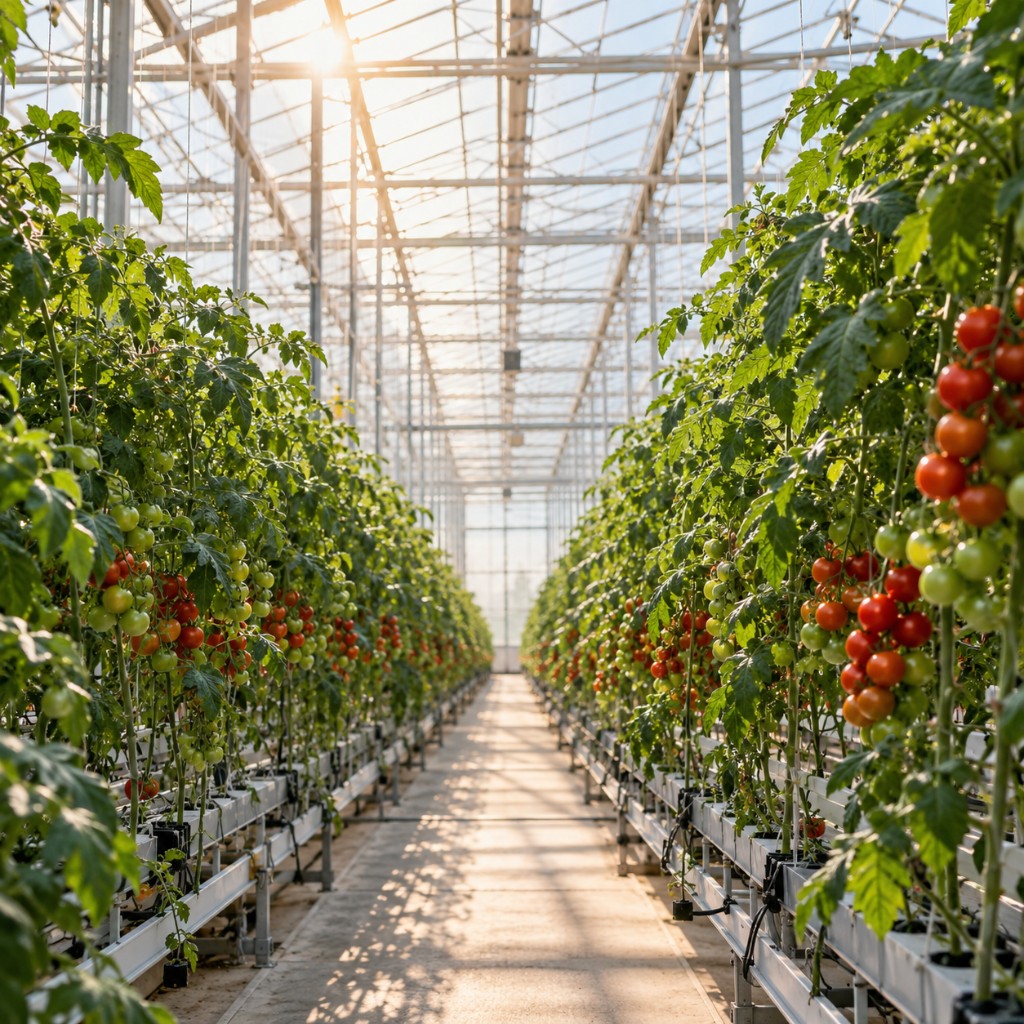
Greenhouse farming is one of the clearest agricultural opportunities in Azerbaijan: demand for local tomatoes and cucumbers is steady at home and growing abroad. But a bank or fund doesn’t assess the idea — it assesses the numbers, and the business plan is what shows whether the project holds up through winter, price swings and sales.
Short answer: A greenhouse business plan in Azerbaijan needs to show three things: the technology (greenhouse type, area, crops), the real costs — above all winter heating — and a clear sales market, domestic or export. These are the sections a bank, the Azerbaijan Business Development Fund (formerly SİF) or AKİA checks first before considering financing.
Why is greenhouse farming a promising sector?
Azerbaijani greenhouse tomatoes are well known in foreign markets. In 2025, tomato exports grew by 18.7% to around 172,900 tonnes, while the country had close to 3,000 greenhouses covering roughly 1,500 hectares. Export demand is growing faster than greenhouse capacity — which is exactly what creates room for new projects.
What goes into a greenhouse business plan?
| Section | What it shows |
|---|---|
| Executive summary | Goal, area, crops, investment amount and source of funding |
| Technology | Structure type (glass, polycarbonate, film), heating, irrigation, climate control |
| Market and sales | Domestic market, export, preliminary agreements with buyers |
| Production plan | Yield per m², planting schedule, seasonality, staffing |
| Financial model | Capital costs, operating costs, revenue, payback, cash flow |
| Risks | Prices, energy, plant diseases, logistics, currency risk on exports |
Which costs are most often underestimated?
- Winter heating — the main operating cost for a year-round greenhouse.
- Electricity for supplementary lighting and climate equipment.
- Logistics, sorting, packaging and cold storage of the harvest.
- Phytosanitary documents and importing-country requirements for export-oriented projects.
How does the business plan affect financing?
For bank loans and concessional programmes (the Business Development Fund, AKİA), the business plan is the core document under review. Each programme has its own requirements for structure, calculations and supporting documents, so one plan rarely fits every funding source without adjustment.
— SME: In greenhouse projects, the weakest point of a business plan is usually the winter heating calculation. If payback depends only on summer yields, it shows immediately at review. We build the model month by month, not as a yearly average.
Frequently asked questions
Do I need a business plan for a small greenhouse?
If you’re taking a loan or applying for concessional financing — yes. Even with your own funds it’s useful: it shows payback and break-even before construction starts.
Which crops are usually included in the plan?
Most often tomatoes and cucumbers — Azerbaijan’s main greenhouse crops. The choice depends on the target market and the greenhouse type.
Can a greenhouse be export-oriented?
Yes, but the plan needs to account for importing-country requirements, phytosanitary documents, logistics and currency risk.
How long does it take to prepare the business plan?
It depends on the project’s scale and how ready the inputs are: site, technology, supplier quotes.
This article is for general information and does not replace individual advice. Financing terms and requirements can change — confirm current conditions or talk to SME.
Planning a greenhouse project? SME prepares business plans for banks, the Business Development Fund and AKİA.
Full overview: Business Plans for Azerbaijan: What Investors and Banks Expect
Sources
HortiDaily, 06.03.2026 (citing abc.az) — greenhouse area and 2025 tomato exports in Azerbaijan. State Customs Committee — customs.gov.az.
Last reviewed: October 2026.